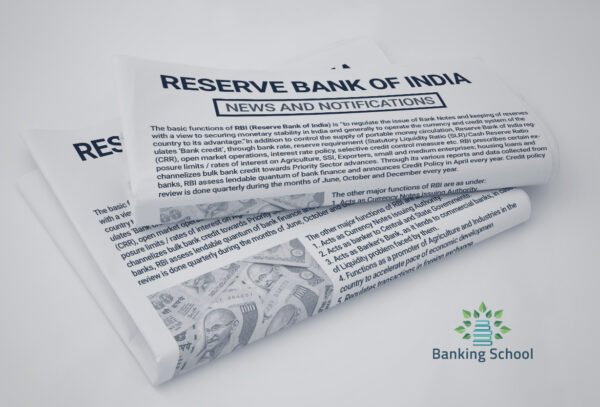
RBI Constitution, Governance, and Evolving Mandate: An Academic Overview

The Reserve Bank of India (RBI) is a statutory central bank established under the Reserve Bank of India Act, 1934, entrusted with monetary authority, financial stability, currency issuance, and oversight of payment and credit systems in India within a public-law governance framework anchored in statute and subordinate regulation. Over time, major organizational and functional developments—from…


Central Banking in Contemporary India: Autonomy, Credibility, and Fiscal-Monetary challenges

Central banking remains desirable in India because it anchors price stability, safeguards financial stability, and mitigates crisis dynamics through lender-of-last-resort functions while shaping expectations in a structurally supply-sensitive economy. India’s post-2016 flexible inflation targeting (FIT) regime, CPI anchoring, and a statutory Monetary Policy Committee (MPC) have institutionalized a rule-based, credible framework, improving macro predictability and…

Functions of a Central Bank: An Institutional Pillar of Monetary and Financial Stability

Central banks are among the most significant institutions in the architecture of modern economies. Their functions extend far beyond the traditional role of currency issuance, encompassing critical responsibilities in monetary policy, financial stability, economic development, and systemic regulation. By acting as banker to the government, banker to commercial banks, custodian of currency, and regulator of…

Rationale and Functions of Central Banks: Evolution of Theory and Practice

The institution of the central bank has become indispensable in modern economies, serving as the custodian of monetary stability, lender of last resort, and regulator of the financial system. Over centuries, central banks have transformed from simple issuers of currency and financiers of governments to complex institutions with wide-ranging responsibilities. Their functions now extend to…

Financing the Poor as Bankable Opportunities: Microcredit, SHGs, and Institutional Architecture in India

Microcredit and Self-Help Groups (SHGs) have transformed low-income households from perceived “unbankable” clients into viable borrowers by leveraging social intermediation, group-based lending, and graduated credit access. The Indian microfinance ecosystem—anchored by the SHG–Bank Linkage Programme (SBLP), Microfinance Institutions (MFIs), and enabling roles of NABARD, SIDBI, RBI, and GoI—offers a scalable, risk-aware pathway to inclusive growth…

Role of Digital Technologies in Financial Inclusion and Rural Development

Digital technologies are emerging as a cornerstone of financial inclusion and rural development. By reducing transaction costs, extending last-mile access, and enabling precision agriculture, these technologies are reshaping rural economies in India and globally. Policy initiatives and market-led innovations—ranging from digital public infrastructure (DPI) to IoT-driven farming solutions—are accelerating income gains, financial resilience, and sustainable…

Role of Banking in Rural Transformation: Emerging Trends and Inclusive Practices

Banking has long been recognized as a key instrument in fostering rural development, particularly in economies like India where a significant portion of the population still resides in rural areas. As rural communities evolve in response to economic shifts, technological adoption, and changing policy frameworks, the nature and scope of rural banking are also undergoing…

Need for and Activities of Self-Help Groups (SHGs)

(This article elucidates self-help groups, their activities, bank loan facilities, advantages of lending to SHGs, Aajeevika- National Rural Livelihoods Mission (NRLM) for women SHGs in rural areas.) Self Help Groups (SHGs) are important because they help the poor access financial services, generate employment, and address social issues, especially in rural areas where many people don’t…

How RBI Guides Banks on Livelihood Missions, Disaster Relief, and Inclusive Credit for SCs, STs, and Minorities

The Reserve Bank of India (RBI) periodically consolidates and updates its regulatory guidelines to ensure banks deliver credit in a structured, inclusive, and resilient manner. The latest frameworks matter now because they address three critical fronts: (i) livelihood promotion through ongoing programs such as DAY-NRLM, while formally closing DAY-NULM, (ii) standardized relief measures for borrowers…