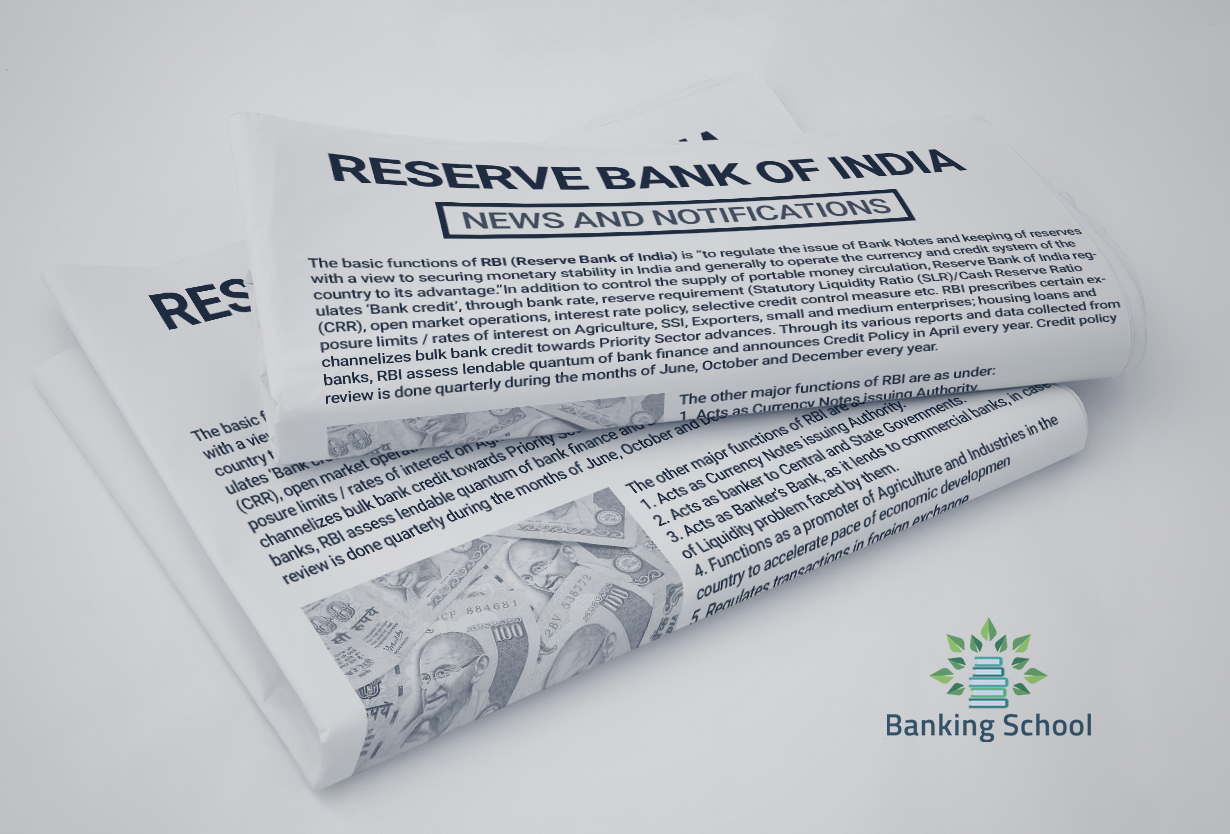
The ‘Payment and Settlement Systems Act, 2007 (PSS Act)’ lays down the legal foundation for regulating and supervising payment systems in India. Two of its most crucial provisions relate to the Designated Authority and Authorization, which define who governs payment systems and how entities are permitted to operate.
Designated Authority
* Reserve Bank of India (RBI) is the designated authority under the Act, entrusted with the regulation and supervision of all payment systems in India.
* The RBI carries out these responsibilities through the Payments Regulatory Board (PRB), which consists of:
* The RBI Governor (Chairperson)
* The Deputy Governor in charge of payment systems
* Nominated RBI officers
* Members appointed by the Central Government
* The PRB oversees:
* The regulatory framework
* Granting of authorizations
* Continuous supervision of payment system operators
Authorization**
* Prior RBI Authorization is mandatory for any person or entity to operate a payment system in India.
* Scope of Payment Systems: Includes systems enabling payments between a payer and beneficiary, such as:
* Card networks
* UPI platforms
* Mobile wallets
* Other electronic payment systems
* Entities must apply for and obtain authorization from RBI before starting operations.
* The RBI has the discretion to:
* Grant authorization(if compliant with safety and regulatory norms)
* Refuse authorization (if risks are identified)
* Revoke authorization (in case of violations or non-compliance)
Why These Provisions Matter
By centralizing regulatory powers with the RBI and mandating prior authorization, the Act ensures:
* Safety of transactions
* Security of the payment ecosystem
* Systemic stability, minimizing risks of disruptions
These checks and balances make the PSS Act a cornerstone for maintaining trust and discipline in India’s rapidly growing digital payment infrastructure.
Summary Table: Designated Authority vs. Authorization (PSS Act, 2007)
| Aspect | Designated Authority | Authorization |
| Who/What | Reserve Bank of India (RBI), through the Payments Regulatory Board (PRB) | Any person or entity seeking to operate a payment system in India |
| Role | Regulates, supervises, and oversees all payment systems | Seeks RBI’s approval to operate payment systems |
| Composition | PRB consists of: RBI Governor (Chairperson), Deputy Governor (payments), nominated RBI officers, Govt.-appointed members | Not applicable (applies to operators such as card networks, UPI, wallets, etc.) |
| Key Functions | • Frame regulatory framework • Grant or revoke authorizations • Monitor compliance & systemic stability | • Apply for authorization • Operate only after RBI approval • Comply with safety and regulatory norms |
| Powers | Can authorize, refuse, or revoke permission to operate payment systems | Cannot operate without RBI’s authorization; must adhere to conditions imposed |
| Objective | Ensure safety, security, and systemic stability of India’s payment infrastructure | Enable only trusted, compliant, and regulated operators to provide payment services |
Related Posts: