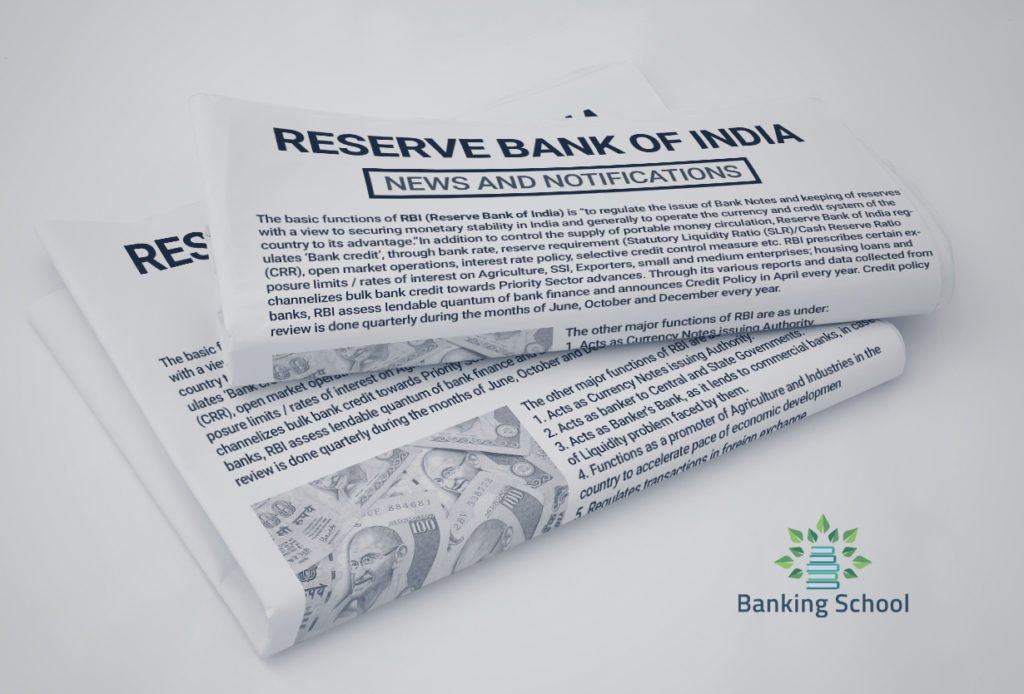
The institution of the central bank has become indispensable in modern economies, serving as the custodian of monetary stability, lender of last resort, and regulator of the financial system. Over centuries, central banks have transformed from simple issuers of currency and financiers of governments to complex institutions with wide-ranging responsibilities. Their functions now extend to inflation targeting, systemic risk management, financial inclusion, and even green finance. To appreciate the contemporary significance of central banks, it is essential to understand their rationale, functions, and the evolution of theory and practice across developed and developing nations.
Rationale for Central Banking
The establishment of central banks is underpinned by economic, financial, and institutional imperatives. Key rationales include:
- Monetary Credibility and Currency Uniformity: In early financial systems, private banknotes created instability due to varying reliability. A central authority issuing universally accepted legal tender ensured trust in money.
- Financial Stability: Central banks emerged to prevent financial panics by acting as lender of last resort (as conceptualized by Walter Bagehot in the 19th century).
- Macroeconomic Management: Beyond price stability, central banks align monetary policy with growth, employment, and development objectives, particularly in emerging economies.
- Independence and Neutrality: By being institutionally separated from day-to-day political influence, central banks maintain credibility in managing inflation and resisting fiscal dominance.
These rationales point to the central bank as both a stabilizing institution and a proactive driver of economic policy.
Functions of Central Banks
The role of a central bank has continually expanded, but its core functions remain broadly defined across three dimensions:
Monetary Policy Implementation
- Setting baseline interest rates and controlling money supply.
- Implementing inflation-targeting frameworks, often with medium-term horizons.
- Using open market operations, repo/reverse repo facilities, and reserve requirements.
Currency Issue and Reserve Management
- Exclusive authority to issue national currency.
- Managing physical cash circulation and digital payment systems.
- Holding foreign exchange reserves to safeguard external stability.
Financial Stability and Supervision
- Regulating commercial banks and non-bank financial institutions.
- Monitoring systemic risks through macroprudential policies.
- Responding to crises through liquidity backstops and emergency measures.
Developmental and Inclusive Functions
- Directing credit towards priority sectors (agriculture, MSMEs, exports).
- Expanding financial inclusion through digital banking and microfinance initiatives.
- Promoting innovations in payments (e.g., UPI in India).
Evolution of Central Banking: Theory and Practice
The practical and theoretical understanding of central banking evolved through distinct historical phases:
Early Origins (17th–18th Century)
- Institutions like Riksbank (1668) and Bank of England (1694) were created to provide government borrowing and to issue uniform currency.
- Limited monetary policy; focus was largely on financing war expenditures and stabilizing currencies.
Classical Gold Standard Era (19th Century)
- Central banks were tasked with maintaining convertibility of currency into gold.
- Theory emphasized monetary discipline and non-intervention (laissez-faire).
- Bagehot’s principle of lending freely at a penalty rate to solvent banks during crises became central.
Inter-War Period and Great Depression (1919–1939)
- Collapse of the gold standard forced central banks to intervene more actively.
- Emphasis on combating deflation, unemployment, and systemic fragility.
- The Federal Reserve and Bank of England adapted to expanded roles in stabilizing economies.
Post-War Keynesian Consensus (1945–1970s)
- Keynesian theory guided central banks to align monetary policy with fiscal expansion.
- Objectives included full employment, growth, and moderate inflation.
- Institutions like the IMF promoted currency stability in the Bretton Woods framework.
Monetarist Revolution (1970s–1980s)
- High inflation led to a shift toward monetarism and inflation control.
- Theories of Milton Friedman emphasized money supply targeting.
- Central bank independence became an important institutional benchmark.
Contemporary and Post-Crisis Era (1990s–present)
- Inflation targeting frameworks emerged as the global standard.
- Global financial crisis of 2008 expanded functions:
- Quantitative easing and unconventional stimulus.
- Macroprudential regulation to detect systemic vulnerabilities.
- Greater transparency and communication strategies to manage expectations.
- Recent pandemic experience (2020–22) reinforced dual functions of crisis management and developmental support.
- Climate finance and digital currencies introduced new dimensions to central banking policy.
Central Banks in Developed Countries
In advanced economies, central banks largely focus on price stability and systemic risk management, backed by institutional independence and advanced policy tools.
Key Characteristics
- Institutional Independence: Federal Reserve (US), European Central Bank (ECB), and Bank of England operate autonomously from political interference.
- Policy Objectives: Clear inflation targeting (generally 2%). Growth and employment objectives are secondary, except in the Fed’s dual mandate model.
- Market-Based Operations: Use of repo rates, open market operations, and forward guidance.
- Global Role: They shape international financial architecture, manage spillovers, and coordinate during crises (e.g., swap lines during 2008).
Case Study: Federal Reserve System
- Established in 1913 after recurrent banking crises.
- Dual mandate: maximum employment and stable prices.
- Adopted quantitative easing during 2008–2015 and again during COVID-19.
Case Study: European Central Bank
- Established in 1998 under the Maastricht Treaty.
- Exclusive mandate for price stability in the Eurozone.
- Expanded into banking supervision after the Eurozone debt crisis.
Central Banks in Developing Countries
In developing economies, central banks blend traditional monetary stabilization objectives with developmental mandates.
Distinct Features
- Developmental Role: Supporting credit delivery to agriculture, MSMEs, and export promotion.
- Financial Inclusion Focus: Expanding rural banking, microfinance, and digital systems.
- Reduced Autonomy: Fiscal dominance and political pressures often limit independence.
- Managing Volatility: Greater exposure to exchange rate fluctuations, capital flows, and global commodity shocks.
Case Study: Reserve Bank of India (RBI)
- Established in 1935, later nationalized in 1949.
- Performs traditional monetary functions but also plays a developmental role:
- Priority sector lending and rural finance.
- Financial inclusion via Jan Dhan Yojana, UPI, and digital regulations.
- Inflation targeting framework adopted in 2016.
Case Study: People’s Bank of China (PBoC)
- Dual objectives of monetary stability and national economic development.
- Greater reliance on direct credit allocation and state-linked objectives.
- Plays a major role in regulating China’s fast-growing financial and digital payment systems.
Challenges in Central Banking Today
- Balancing Autonomy and Accountability: Political pressures challenge independence.
- Globalization: Spillover effects from capital flows and international crises.
- Technological Change: Need to regulate fintech, cryptocurrencies, and central bank digital currencies (CBDCs).
- Climate Change and Sustainability: Integrating environmental risks into monetary and supervisory mandates.
- Unequal Capacity: While advanced economies innovate with monetary tools, developing nations struggle with resource constraints.
Conclusion
Central banking has journeyed from narrow roles of currency issuance and government finance to assuming a central role in economic life. The theoretical debates—from gold standard conservatism to Keynesian activism and modern inflation targeting—highlight central banks’ responsiveness to evolving crises and economic needs. In developed countries, autonomy and inflation stability dominate, while in developing economies, central banks address growth, development, and financial inclusion priorities.
The continuing evolution of central banking demonstrates its dynamic character—an institution that adapts to changing global realities while anchoring monetary and financial stability. Its future roles in climate finance, digital currencies, and global financial governance reiterate the significance of central banks as indispensable institutions in the 21st century.
CAIIB –Central Banking (elective) –‘Model A’ related articles