Agriculture has always been the backbone of the Indian economy, not only as a source of livelihood for a large section of the population but also as a driver of growth, food security, and rural development. Despite rapid industrialization and the rise of the services sector, agriculture continues to play a foundational role in shaping India’s socio-economic landscape.
This article explores the structure and characteristics of Indian agriculture, its role in economic development, the interlinkages between agriculture and industry, existing challenges, and the emerging policy focus including the National Mission for Sustainable Agriculture (NMSA).
Structure and Characteristics of Indian Agriculture
- Predominance of small and marginal farmers: More than 85% of farmers in India operate on small landholdings, often less than two hectares, leading to low economies of scale.
- Dependence on monsoon: Although irrigation infrastructure has improved, Indian agriculture still heavily relies on rainfall, making it vulnerable to climate variability.
- Diverse cropping patterns: Agriculture varies across regions, with crops such as rice, wheat, pulses, cotton, and sugarcane dominating, alongside horticulture and animal husbandry.
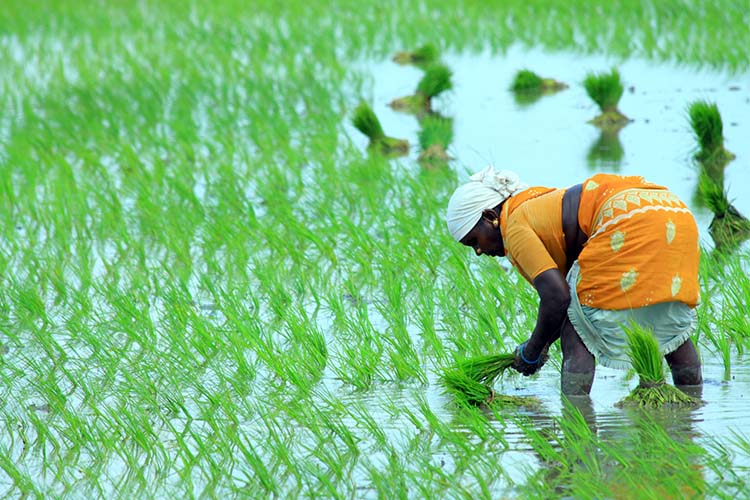
- Labour-intensive production: Mechanization is increasing, but agriculture still employs manual labor extensively, reflecting its role as a major employment provider.
Role of Agriculture in Economic Development
Agriculture serves as a pillar of the Indian economy in multiple ways:
- Employment generation: It employs more than 40% of India’s workforce, offering livelihood in rural areas.
- Food security: Ensures availability of cereals, pulses, fruits, and vegetables for the growing population.
- Contribution to GDP: Though its share in GDP has declined to around 18%, it remains a critical sector supporting economic stability.
- Rural income and poverty reduction: Farmers’ income influences rural consumption, which drives demand for industrial goods.
- Export earnings: India is a leading exporter of rice, spices, tea, cotton, and other agricultural commodities.
Agriculture–Industry Linkage
The relationship between agriculture and industry is mutually reinforcing:
- Supply of raw materials: Cotton, sugarcane, oilseeds, and jute feed agro-based industries.
- Market for industrial goods: Rising income among farmers boosts demand for fertilizers, machinery, and consumer goods.
- Capital formation: Agricultural surplus provides savings and tax revenues that support industrial growth.
- Employment linkages: Agro-processing and food industries create additional jobs and value chains.
Issues in Economic Development of Agriculture
Despite its importance, Indian agriculture faces several developmental issues:
- Fragmented landholdings reducing efficiency.
- Limited irrigation coverage and over-exploitation of groundwater.
- Price volatility and inadequate marketing infrastructure.
- Farmer indebtedness and vulnerability to crop failures.
- Climate change impacts including droughts, floods, and pest attacks.
Resources in Agriculture
Agricultural development relies on the optimal use of multiple resources:
- Land: The most vital but limited resource, facing degradation and overuse.
- Water: Unequal distribution and declining groundwater levels pose major concerns.
- Labor: A large workforce with low productivity due to skill gaps.
- Capital: Investments in credit, storage, logistics, and modern technology are essential.
Technical Change in Agriculture
India has witnessed major technological transformations:
- Green Revolution: Introduced high-yielding varieties, irrigation, and fertilizers that boosted productivity.
- Mechanization: Use of tractors, harvesters, and drip irrigation systems increased efficiency.
- Biotechnology: Development of pest-resistant and hybrid crops enhanced yields.
- Digital agriculture: Use of drones, remote sensing, and data analytics is emerging in precision farming.
Constraints in Agricultural Development
While technology has advanced, challenges persist:
- Low investment in rural infrastructure.
- Access barriers to institutional credit for small farmers.
- Price mismatches between input costs and farm produce.
- Post-harvest losses due to lack of cold chain and storage.
- Unequal benefits of technological advancements across regions.
Emerging Issues in Indian Agriculture
Modern agriculture faces new concerns:
- Climate change: Rising temperatures and changing rainfall patterns affect productivity.
- Sustainable farming: Balancing productivity with environmental protection is critical.
- Digital adoption: Bridging the digital divide between large and small farmers.
- Inclusive growth: Ensuring benefits reach women farmers and marginalized groups.
- Global competitiveness: Enhancing quality standards to meet export requirements.
National Mission for Sustainable Agriculture (NMSA)
To address sustainability challenges, the Government of India launched the National Mission for Sustainable Agriculture (NMSA) under the National Action Plan on Climate Change. Its objectives include:
- Promoting climate-resilient agricultural practices.
- Enhancing soil health and fertility through organic farming and nutrient management.
- Improving water-use efficiency through micro-irrigation.
- Supporting capacity building and farmer awareness programs.
- Encouraging integrated farming systems with livestock, fisheries, and forestry.
The mission reflects a shift towards long-term sustainability, focusing not just on productivity but also on conserving resources for future generations.
Agriculture in India stands at a crossroads—balancing the needs of food security, farmer welfare, industrial linkages, and climate resilience. Strengthening technological innovation, investment in infrastructure, and sustainable farming practices through missions like NMSA can steer Indian agriculture towards inclusive and enduring growth.
CAIIB Rural Banking related article (elective)