Rural India’s economy is anchored in agriculture but increasingly driven by non-farm diversification, with formalization, infrastructure expansion, and digital public infrastructure reshaping finance, livelihoods, and market linkages.
Agriculture
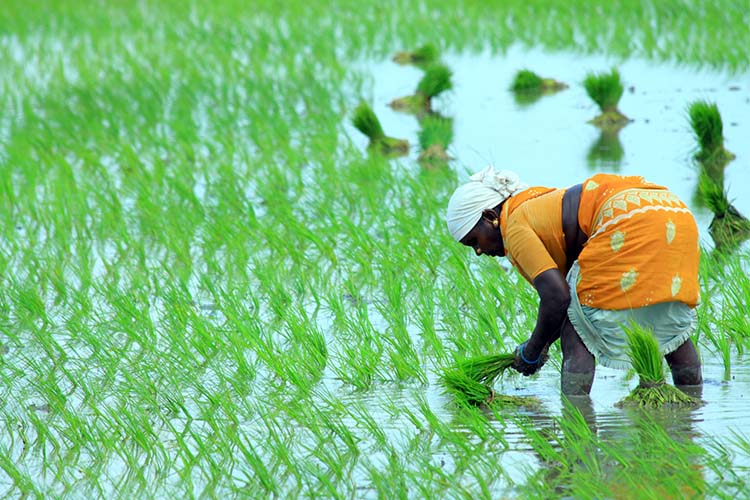
- Agriculture and allied activities remain the backbone of rural livelihoods, engaging a large share of rural workers, especially women, and driving seasonal cash flows central to credit design.
- Structural characteristics include small and marginal holdings, fragmented land parcels, and high dependence on monsoon and irrigation assets, which heighten income volatility and credit risk.
- Finance priorities: KCC-based crop finance, allied activity lending (dairy, poultry, fisheries), farm mechanization (custom hiring centers), irrigation and micro-irrigation, post-harvest finance (warehouse receipts), and risk transfer through crop insurance.
Non-farm activities
- Rural non-farm activity spans trade, transport, construction, repairs, personal services, agri-processing, and small manufacturing, forming a substantial MSME base.
- This diversification stabilizes incomes, deepens working capital demand, and increases need for payment solutions, bill discounting, and micro-insurance.
- Bankable models include producer collectives/FPOs, SHG/JLG-based microenterprise lending, dairy and food processing value chains, and rural logistics.
GDP and GVA: Relevance for Rural Banking
- While agriculture’s share in GVA has trended lower over time, it continues to anchor rural demand and labor absorption; services dominate overall GVA but rural services growth is increasingly salient.
- For bankers, GVA composition signals sectoral underwriting opportunities: manufacturing and construction cycles influence rural wages and MSME cash flows, while services growth underpins transaction volumes and deposits.
- Monitoring real vs nominal growth matters for pricing credit, NPA risk in cyclical segments, and calibrating collateral coverage.
Rural money markets
- Formal markets: scheduled commercial banks, RRBs, cooperative credit institutions, SFBs, NBFCs, MFIs, and BC networks delivering deposits, credit, payments, and insurance.
- Informal markets: moneylenders, trade credit, input dealers, friends/family—valued for speed and flexibility but often high-cost and opaque.
- Policy and product levers to shift borrowing formal: digitized KCCs, e-KYC and cashflow-based lending, SHG-BLP deepening, JLGs, embedded finance in value chains, and secured lending via e-NWRs.
Rural indebtedness
- Drivers include income seasonality, health/education shocks, productivity gaps (low mechanization, outdated inputs), and market power asymmetries.
- Risk manifestations: multiple borrowing, debt spirals from high-cost credit, collateral constraints, and mismatch between loan tenors and income cycles.
- Mitigants: income diversification, insurance penetration (crop, livestock, health), savings products tuned to seasonality, top-up loans linked to cashflows, and credit counseling with financial literacy.
Rural poverty
- Rural poverty has fallen over time but remains higher than urban, with pockets of multidimensional deprivation (health, education, housing, sanitation, clean energy).
- Poverty is heterogenous across states, social groups, and geographies (tribal areas, rainfed zones), requiring granular targeting and convergence across schemes.
- Banking relevance: responsible finance, interest subvention-linked credit where eligible, livelihood finance for women’s collectives, and social protection portability via DBT rails.
Measuring the poverty line: methods
- Consumption-based poverty lines: anchored in cost of basic needs; used historically for headcount ratios at national and state levels.
- Tendulkar method: revised price indices and broader consumption baskets; shifted poverty estimates compared to earlier methods.
- Rangarajan method: alternative thresholds with updated calorie and non-food norms.
- Multidimensional approaches: incorporate health, education, and living standards indicators; useful for targeting and monitoring beyond income.
- Banker takeaway: combine income/consumption screening with multidimensional cues (WASH, housing, education, health) for suitability and product design.
Sustainable Development Goals (SDGs)
- SDG linkages to rural banking: No Poverty (credit plus insurance), Zero Hunger (agri productivity, storage, value chains), Good Health (micro-insurance, health infra), Quality Education (ed-finance, skilling), Gender Equality (SHGs, women-owned enterprises), Clean Energy (solar pumps, clean cooking), Decent Work (MSME finance), Industry/Innovation (rural digital rails), Reduced Inequalities (priority sector), and Partnerships (FPOs, NGOs, PRIs).
- SDG-aligned portfolios can reduce risk through positive externalities (health, education, resilience) while meeting ESG goals and impact mandates.
Infrastructure in India: rural lens
- Physical infrastructure: roads, rail connectivity, logistics parks, rural markets, storage and cold chain, irrigation, and electrification—each lowers transaction costs and increases market access.
- Social infrastructure: schools, skill centers, health and wellness centers, anganwadis; these improve human capital and long-run creditworthiness.
- Digital public infrastructure: Aadhaar, UPI, DBT, AePS, and OCEN paradigms enable low-cost onboarding, payments, and cashflow-based credit.
Transport
- All-weather rural roads and improved connectivity reduce spoilage, expand market reach, and support just-in-time input delivery.
- Financing opportunities: transport MSMEs, LCVs, rural logistics, and working capital for aggregation hubs tied to farmer groups and processors.
Markets
- Primary agricultural markets, sub-yards, private mandis, FPO-led collection centers, and e-trading platforms improve price discovery and reduce intermediation layers.
- Finance enablers: receivables finance, factor/forfaiting for buyers, embedded finance with processors/retailers, and inventory finance backed by warehousing receipts.
Rural electrification
- Near-universal connections have expanded productive uses: dairy chilling, rice mills, oil expellers, cold rooms, solar irrigation, and rural services.
- Financing implications: capex loans for energy-efficient equipment, solar assets with PAYG models, and performance-linked working capital for energy-enabled enterprises.
Other essential services
- Water and sanitation: credit for household toilets, piped water connections, and community infrastructure reduces disease burden and income volatility.
- Health and nutrition: micro-insurance, health loans, and financing for clinics, diagnostics, and telemedicine hubs in rural blocks.
- Education and skilling: loans for vocational training, ed-tech subscriptions, and working capital for rural training providers aligned to local market demand.
Implications for rural bankers
- Align product suites with seasonal agri cycles and non-farm cashflows; diversify exposure across allied activities and services to stabilize portfolio risk.
- Use data rails to price risk: transaction histories, e-NAM/e-commerce sales, GST where applicable, and utility payment footprints for MSMEs.
- Expand BC and SHG/JLG networks alongside FPO tie-ups to reduce acquisition cost, improve recoveries, and deepen inclusion.
- Promote risk transfer: PMFBY and weather covers, livestock insurance, health insurance, and enterprise insurance for shocks.
- Support SDG-aligned credit: clean energy, WASH, affordable housing upgrades, and women-led enterprise finance for both impact and credit quality gains.
CAIIB Rural Banking related article (elective)