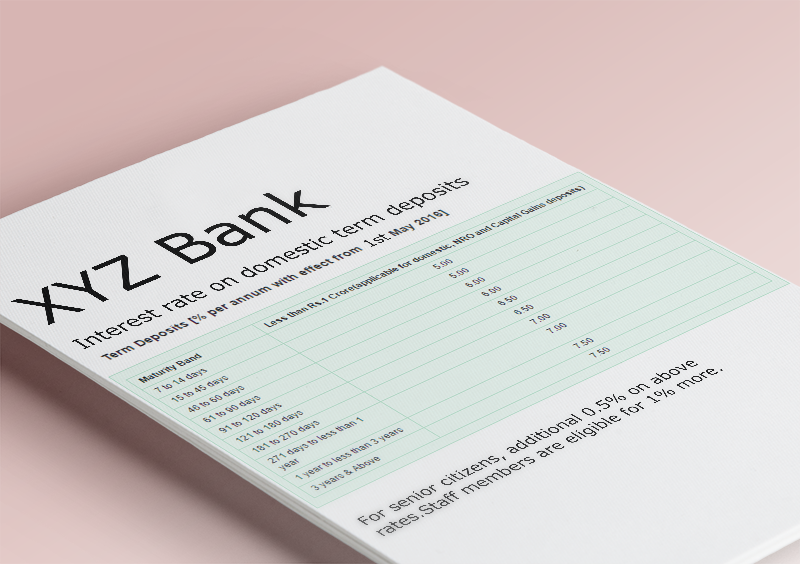
Savings bank accounts offer a secure and reliable method for safeguarding funds, thereby providing account holders with peace of mind. Deposited amounts are protected against theft and loss, ensuring a high degree of financial security.
Services Offered in Savings Bank Accounts:
1. Convenient Access to Funds:
Savings account holders benefit from convenient access to their funds, which may be utilized for routine expenditures, emergencies, or planned investments. The liquidity provided by these accounts renders them an essential financial tool for individuals.
2. Interest Earnings:
Banks offer interest on the balances maintained in savings accounts, with rates typically ranging between 2.60% and 8.00% per annum in India. These rates vary depending on the financial institution and the amount maintained in the account.
3. Cheque Book Facility:
Most banks provide cheque books for regular savings accounts; however, Basic Savings Bank Deposit Accounts (BSBDAs) may not include this feature. Customers may request cheque books for payment purposes, with some banks offering a limited number of free cheque leaves during a specified period. Subsequent cheque leaves may incur additional charges.
4. Debit Cards:
As part of the account opening process, banks issue debit cards to savings account holders. These cards enable users to withdraw cash from ATMs and make purchases at merchant outlets, thereby enhancing convenience and accessibility.
5. Utility for UPS Transactions:
In India, savings accounts may also facilitate payments for UPS shipments through online or branch-based transactions. Customers can initiate payments via internet or mobile banking platforms, or alternatively, by opting for NEFT (National Electronic Funds Transfer) or RTGS (Real-Time Gross Settlement) services at their bank branches.
6. Digital Banking Capabilities:
Many banks now offer comprehensive digital banking services, enabling customers to manage accounts, transfer funds, and execute payments online. NEFT and RTGS transactions can be initiated via internet or mobile banking by adding beneficiaries with the requisite details, including the beneficiary’s name, bank branch, IFSC code, account type, and account number. Once the beneficiary is registered, remitters may authorize transactions digitally or through offline channels by submitting the NEFT application form at the branch.
7. Automated Bill Payments:
Savings accounts may be configured for automated bill payments, thereby streamlining recurring financial obligations. This facility ensures the timely settlement of utility bills, subscriptions, and other regular payments without the need for manual intervention.
8. Deposit Insurance:
In India, deposits maintained in savings accounts are insured up to ₹5,00,000 (Rupees Five Lakhs) under the Deposit Insurance and Credit Guarantee Corporation (DICGC). This insurance covers both principal and accrued interest, offering an additional layer of security in the event of a bank’s liquidation or insolvency.
9. Additional Insurance Benefits:
Certain banks extend supplementary benefits such as life insurance or accidental coverage to savings account holders. These benefits are typically provided up to a specified limit and may require payment of a nominal annual premium.
10. Cross-Product Benefits:
Some banks offer preferential terms and discounts on ancillary services, such as locker rentals, to customers maintaining savings accounts, thereby enhancing the overall value proposition.
11. SMS Banking:
Several banks provide SMS banking services, which offer transaction alerts and other account-related information directly to the customer’s mobile phone, promoting enhanced monitoring and control over account activities.
Related Posts: