

Overview of Money Market Products in India
The money market is a critical segment of the financial system where short-term debt instruments are traded. These instruments typically have maturities of up to one year and are considered low-risk investments offering high safety and liquidity. The money market plays a vital role in helping governments, corporations, and financial institutions manage their short-term funding…
Read article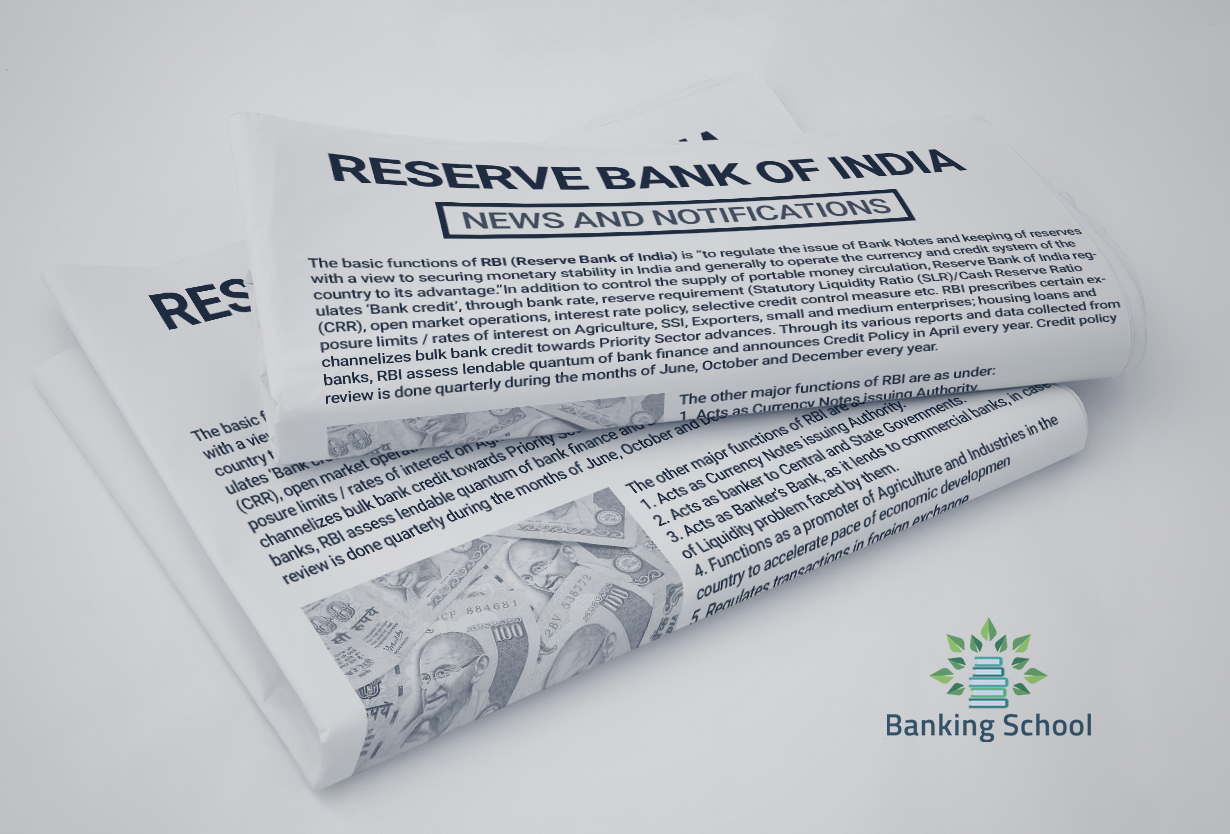
Securitisation of stressed assets: Regulatory purview
As per the current guidelines, Securitisation is allowed only in the case of standard assets while lenders have to largely rely on Asset Reconstruction Companies (ARCs) for bad assets. Based on market feedback, stakeholder consultations, and the recommendations of the Task Force on Development of Secondary Market for Corporate Loans, RBI decided to introduce a…
Read article FSDC reviews major impact on global/ domestic economy and financial markets
A meeting of the Sub-Committee of the Financial Stability and Development Council (FSDC) was held today (January 13, 2021) in Mumbai through video conference. RBI Governor Shri Shaktikanta Das, chaired the meeting. In the meeting, topics of the major impact on global and domestic economy as well as financial financial stability were discussed. The following…
Read article
Overview: FEDAI with Other Regulatory Organisations in India
With the increasing globalization of financial markets and ongoing deregulation, the role of self-regulatory organizations like FEDAI has evolved significantly. Today, FEDAI plays a catalytic role in ensuring the smooth functioning of India’s foreign exchange markets by fostering collaboration among key stakeholders, including: Here is a structured comparison of FEDAI with other key financial market…
Read article
India’s Exchange Control Framework: An Overview
India’s exchange control regime is primarily governed by the Foreign Exchange Management Act, 1999 (FEMA). This legislation regulates foreign exchange transactions with the objective of facilitating external trade and payments while promoting the orderly development and maintenance of the foreign exchange market in India. The Reserve Bank of India (RBI), in consultation with the Government…
Functions of Reserve Bank of India-RBI
The basic functions of RBI (Reserve Bank of India) are “to regulate the issue of Bank Notes and keeping of reserves to secure monetary stability in India and generally to operate the currency and credit system of the country to its advantage.”In addition, to control the supply of portable money circulation, Reserve Bank of India…
Read article