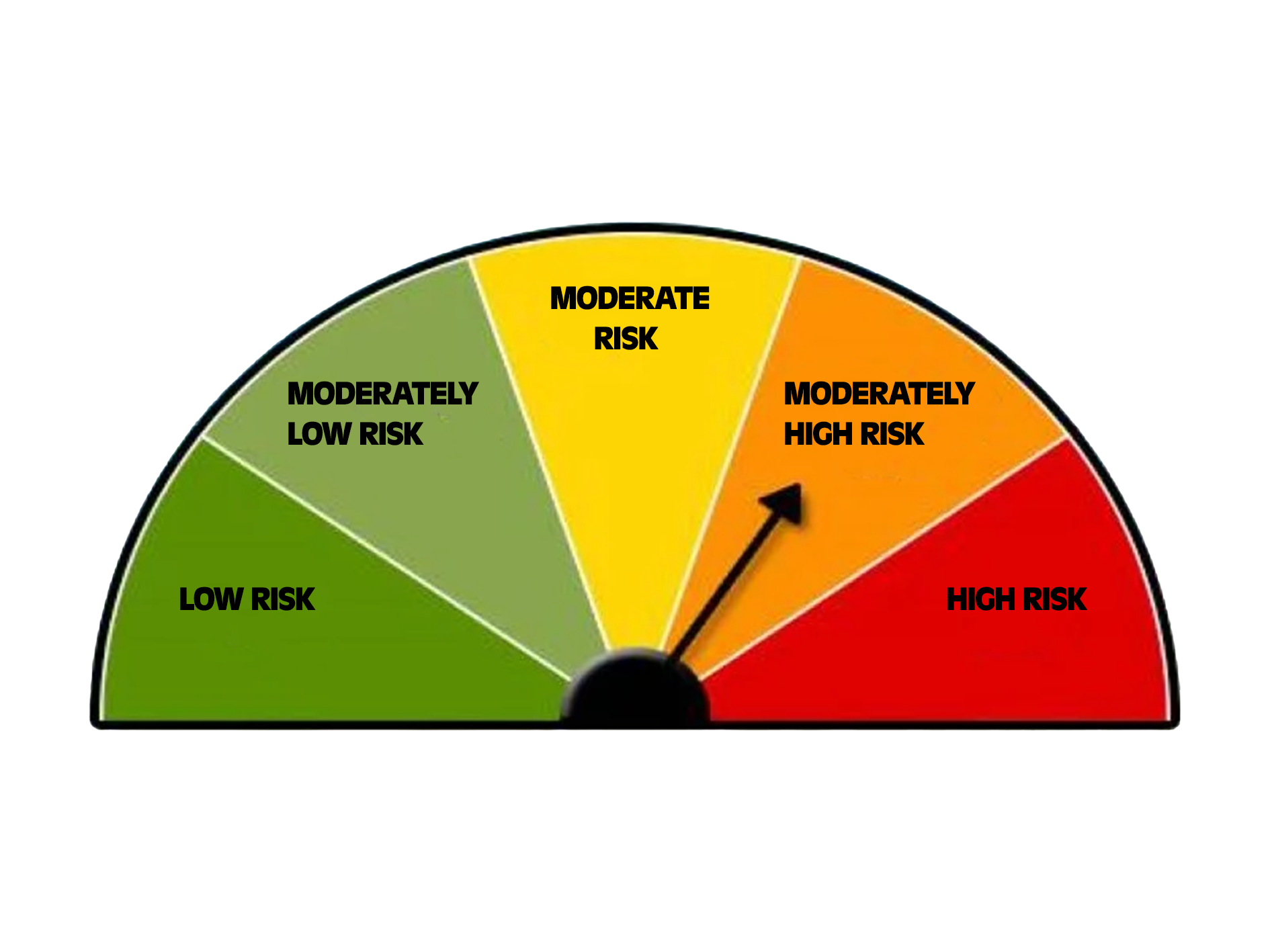
[At the bottom of this article you will find, practical, finance‑ready examples that apply each formula step by step, with clean numbers and brief interpretations]
Executive Summary
Probability theory underpins quantitative risk analysis and investment decision-making by modeling uncertainty, measuring variability, and estimating tail risks across portfolios and credit exposures. This article explains core concepts—probability, conditional probability, random variables, distribution functions, expectation and standard deviation, and key distributions—binomial, Poisson, and normal—followed by practical finance applications including credit risk modeling and Value at Risk (VaR).
- Probability
Definition: Probability quantifies the likelihood of an event A within a sample space S, with 0 ≤ P(A) ≤ 1 and P(S) = 1.
Classical probability: P(A) = number of favorable outcomes / total outcomes for equally likely outcomes.
Axioms:
- P(∅) = 0, P(S) = 1.
- For mutually exclusive events A and B: P(A ∪ B) = P(A) + P(B).
- Complement rule: P(Aᶜ) = 1 − P(A).
- Conditional Probability
Definition: P(A | B) = P(A ∩ B) / P(B) for P(B) > 0.
Multiplication rule: P(A ∩ B) = P(A | B) P(B).
Independence: A and B are independent if P(A ∩ B) = P(A)P(B), equivalently P(A | B) = P(A).
Bayes’ theorem: P(A | B) = [P(B | A) P(A)] / P(B), with P(B) = Σᵢ P(B | Aᵢ)P(Aᵢ) for a partition {Aᵢ}.
- Random Variable
A random variable X maps outcomes to real numbers.
Types:
- Discrete: counts or finite outcomes (e.g., number of defaults).
- Continuous: real-valued outcomes over intervals (e.g., returns).
Support: the set of values X can take, important for summations or integrals.
- Distribution Function
Discrete case: Probability Mass Function (PMF) pₓ(x) = P(X = x).
Continuous case: Probability Density Function (PDF) fₓ(x), with P(a ≤ X ≤ b) = ∫ₐᵇ fₓ(x) dx.
Cumulative Distribution Function (CDF): Fₓ(x) = P(X ≤ x); relates via pₓ(x) = Fₓ(x) − Fₓ(x⁻) (discrete) or fₓ(x) = dFₓ(x)/dx (continuous).
Moments: Mean, variance, skewness, kurtosis derived from F, p, or f.
- Expectation and Standard Deviation
Expectation:
- Discrete: E[X] = Σₓ x pₓ(x).
- Continuous: E[X] = ∫ x fₓ(x) dx.
Variance and standard deviation:
- Var(X) = E[(X − E[X])²] = E[X²] − (E[X])².
- σₓ = √Var(X).
Linearity: E[aX + b] = aE[X] + b, and for independent X, Y, Var(aX + bY) = a²Var(X) + b²Var(Y).
- Binomial Distribution
Setup: X ~ Bin(n, p) = number of successes in n independent Bernoulli trials with success probability p.
PMF: P(X = k) = C(n, k) pᵏ (1 − p)ⁿ⁻ᵏ, k = 0, 1, …, n.
Mean and variance: E[X] = np, Var(X) = np(1 − p).
Finance use: count of defaults over a horizon under independent obligor default assumption; recombining binomial trees for option pricing.
- Poisson Distribution
Setup: X ~ Pois(λ) models counts of rare events over time/space at average rate λ.
PMF: P(X = k) = λᵏ e^(−λ) / k!, k = 0, 1, 2, …
Mean and variance: E[X] = λ, Var(X) = λ.
Approximation: For n large, p small, Bin(n, p) ≈ Pois(λ = np).
Finance use: default counts, claim arrivals, operational loss event frequency in Loss Distribution Approach.
- Normal Distribution
Setup: X ~ N(μ, σ²).
PDF: f(x) = [1 / (σ√(2π))] exp(−(x − μ)² / (2σ²)).
Standardization: Z = (X − μ)/σ ~ N(0, 1) enables tail probability lookup.
Properties: linear combinations of jointly normal variables are normal; fully characterized by mean and covariance.
Finance use: modeling returns, risk aggregation, parametric VaR, Black–Scholes assumptions.
- Credit Risk Applications
Default probability (PD): probability an obligor defaults over a horizon; often conditioned on rating or macro factors via P(D | state).
Loss Given Default (LGD) and Exposure at Default (EAD): combine with PD to compute expected loss EL = PD × LGD × EAD.
Portfolio credit models:
- Default-count models using Binomial/Poisson for loss frequency.
- Factor models (e.g., Merton/Vasicek) map macro factor shocks to conditional PDs using normal distributions, enabling correlation across obligors.
Migration and conditional risk: use conditional probability and transition matrices to project rating changes and conditional PDs.Value at Risk (VaR)
Definition: VaR at confidence level α over horizon h is the threshold loss Lα such that P(Loss ≤ Lα) = α.
Methods:
- Parametric (Variance–Covariance): assume portfolio return R ~ N(μ, σ²); for one-day horizon, VaRα ≈ −(μ + zα σ) V, where zα is the standard normal quantile and V is current portfolio value; often use mean ≈ 0 for short horizons yielding VaRα ≈ zα σ V.
- Historical simulation: order historical P&L and read off the (1 − α) tail quantile.
- Monte Carlo: simulate risk factor paths from estimated distributions, revalue portfolio, and estimate the loss quantile.
Scaling and correlations:
- For independent, identically distributed normal daily returns, multi-day standard deviation scales as σ_h ≈ σ_1 √h.
- Portfolio variance under normality: σ_p² = wᵀ Σ w, where w are weights and Σ is the covariance matrix; drives multi-asset VaR.
Caveats:
- Non-normal tails and skewness can understate tail risk; consider fat-tailed models (e.g., t-distribution) or Expected Shortfall.
- VaR is not subadditive under all distributions; Expected Shortfall is coherent and often preferred for regulation and internal risk control.
Practical Examples (equation-ready)
Conditional default probability:
- Given sector stress S: P(D | S) = P(D ∩ S) / P(S).
Binomial default count:
- X ~ Bin(n, p), expected defaults E[X] = np.
Poisson event frequency:
- Operational incidents X ~ Pois(λ), with P(X ≥ 1) = 1 − e^(−λ).
Normal VaR (one day, mean 0):
- VaR₉₉% ≈ 2.33 σ V; VaR₉₅% ≈ 1.65 σ V.
Portfolio aggregation (two assets):
- σ_p² = w₁² σ₁² + w₂² σ₂² + 2 w₁ w₂ ρ₁₂ σ₁ σ₂.
Appendix A: Quick Reference Formulas
Conditional probability: P(A | B) = P(A ∩ B) / P(B).
Bayes’ theorem: P(A | B) = [P(B | A) P(A)] / Σᵢ P(B | Aᵢ)P(Aᵢ).
Expectation (discrete): E[X] = Σₓ x pₓ(x).
Expectation (continuous): E[X] = ∫ x fₓ(x) dx.
Variance: Var(X) = E[X²] − (E[X])².
Binomial PMF: P(X = k) = C(n, k) pᵏ (1 − p)ⁿ⁻ᵏ.
Poisson PMF: P(X = k) = λᵏ e^(−λ) / k!.
Normal PDF: f(x) = [1 / (σ√(2π))] e^{−(x − μ)² / (2σ²)}.
Parametric VaR (mean 0): VaRα ≈ zα σ V.
Appendix B: Suggested Educational Exercises
Compute P(A ∪ B) given P(A), P(B), P(A ∩ B).
Given n = 1000, p = 0.01, approximate default count by Poisson and compare to binomial.
Estimate one-day 99% VaR for a portfolio with V = ₹100 crore and σ = 1.2%.
Calibrate λ for Poisson event frequency from 3 years of monthly incident data, then forecast next-year probability of 5+ incidents.
Use historical simulation on 500 days of returns to estimate 95% VaR; compare with parametric VaR.
Here are practical, finance‑ready examples that apply each formula step by step, with clean numbers and brief interpretations.
Probability and conditional probability
- Scenario: A bank sees 8% annual default probability (PD) for unsecured SME loans, and 30% of SMEs are in a stressed sector.
- Joint probability of “stressed sector AND default”: P(D ∩ S) = 0.08 × 0.30 = 0.024.
- Conditional probability of default given stress: P(D | S) = P(D ∩ S) / P(S) = 0.024 / 0.30 = 0.08.
- Interpretation: If PD is already stratified by sector, conditioning preserves the 8%; if PD were unconditional, the conditional PD would typically be higher than unconditional PD in stressed segments.
Bayes’ theorem (rating update)
- Scenario: Prior probability a borrower is “high‑risk” = 15%. A red-flag trigger appears on an account; sensitivity P(trigger | high‑risk) = 60%; false alarm P(trigger | low‑risk) = 10%.
- P(trigger) = 0.60 × 0.15 + 0.10 × 0.85 = 0.09 + 0.085 = 0.175.
- Posterior P(high‑risk | trigger) = 0.60 × 0.15 / 0.175 ≈ 0.514.
- Interpretation: One signal lifts high‑risk probability from 15% to ~51%, justifying enhanced due diligence.
Random variable, expectation, and variance
- Scenario: A one‑day portfolio return R takes values {−1%, 0.2%, 0.8%} with probabilities {0.10, 0.70, 0.20}.
- E[R] = (−0.01)(0.10) + 0.002(0.70) + 0.008(0.20) = −0.001 + 0.0014 + 0.0016 = 0.002.
- E[R²] = (0.0001)(0.10) + (0.000004)(0.70) + (0.000064)(0.20) = 0.00001 + 0.0000028 + 0.0000128 = 0.0000256.
- Var(R) = E[R²] − (E[R])² = 0.0000256 − 0.000004 = 0.0000216.
- Std dev σ = √0.0000216 ≈ 0.00465 (0.465%).
- Interpretation: Expected daily return 0.20% with 0.465% volatility.
Binomial distribution (default count)
- Scenario: n = 1,000 homogeneous retail loans, PD p = 1% over one year; X ~ Bin(n, p).
- Expected defaults E[X] = np = 10.
- Standard deviation = √(np(1 − p)) ≈ √(10 × 0.99) ≈ 3.15.
- Probability of at most 8 defaults: P(X ≤ 8) = Σ_{k=0}^8 C(1000, k) 0.01^k 0.99^{1000−k} ≈ 0.29 (using a calculator or normal/Poisson approx).
- Poisson approximation: λ = np = 10, P(X ≤ 8) ≈ e^{−10} Σ_{k=0}^8 10^k/k! ≈ 0.33 (close and quick).
- Interpretation: Expect around 10 defaults; up to 8 occurs about 30% of the time.
Poisson distribution (operational incidents)
- Scenario: Average serious fraud incident rate λ = 2 per quarter; X ~ Pois(λ).
- Probability of zero incidents in a quarter: P(X = 0) = e^{−2} ≈ 0.135.
- Probability of at least one: 1 − e^{−2} ≈ 0.865.
- Probability of 3 or more: 1 − [P(0) + P(1) + P(2)] = 1 − [e^{−2}(1 + 2 + 2)] = 1 − [e^{−2} × 5] ≈ 1 − 0.676 = 0.324.
- Interpretation: There is an 86.5% chance of at least one serious incident per quarter.
Normal distribution and standardization
- Scenario: Daily P&L is approximately normal with μ = 0 and σ = ₹15 lakh.
- Probability one‑day loss exceeds ₹25 lakh: convert to Z = 25/15 ≈ 1.667; P(Z > 1.667) ≈ 0.0478.
- 95th percentile loss: z_{0.95} ≈ 1.645, so L_{0.95} ≈ 1.645 × 15 = ₹24.7 lakh.
- Interpretation: About a 4.8% chance to lose more than ₹25 lakh on a day.
Portfolio variance and diversification
- Scenario: Two funds with σ₁ = 12%, σ₂ = 8%, correlation ρ = 0.2, weights w₁ = 60%, w₂ = 40%.
- σ_p² = w₁²σ₁² + w₂²σ₂² + 2w₁w₂ρσ₁σ₂
= 0.6²×0.12² + 0.4²×0.08² + 2×0.6×0.4×0.2×0.12×0.08
= 0.36×0.0144 + 0.16×0.0064 + 0.96×0.00192
= 0.005184 + 0.001024 + 0.001843 ≈ 0.008051.
- σ_p ≈ √0.008051 ≈ 8.97%.
- Interpretation: Diversification reduces volatility below the weighted average due to low correlation.
- σ_p² = w₁²σ₁² + w₂²σ₂² + 2w₁w₂ρσ₁σ₂
Beta and systematic risk
- Scenario: Regress monthly fund excess returns on market excess returns; slope estimate β = 1.2, residual std dev (idiosyncratic) = 4% monthly.
- Expected excess return via CAPM: E[R_i − R_f] = β(E[R_m − R_f]) = 1.2 × 0.5% = 0.6% per month.
- Total variance decomposition: σ_i² = β²σ_m² + σ_ε². If σ_m = 3% monthly, σ_i² = 1.44×0.0009 + 0.0016 = 0.001296 + 0.0016 = 0.002896; σ_i ≈ 5.38%.
- Interpretation: Most risk comes from idiosyncratic variance here; portfolioing multiple such funds could reduce that component.
Performance evaluation (Sharpe, Treynor, alpha)
- Scenario: Annualized portfolio: average return 12%, risk‑free 6%, σ = 10%, β = 0.9, market return 11%.
- Sharpe = (12 − 6)/10 = 0.6.
- Treynor = (12 − 6)/0.9 ≈ 6.67.
- CAPM expected return = 6 + 0.9×(11 − 6) = 10.5%; Jensen’s alpha = 12 − 10.5 = 1.5% per year.
- Interpretation: Positive alpha and solid risk‑adjusted scores.
Expected loss in credit risk
- Scenario: PD = 2%, LGD = 45%, EAD = ₹50 crore.
- Expected Loss EL = PD × LGD × EAD = 0.02 × 0.45 × 50 = ₹0.45 crore.
- If downturn LGD rises to 60% conditionally, conditional EL = 0.02 × 0.60 × 50 = ₹0.60 crore.
- Interpretation: Stress increases expected loss by 33%.
Binomial to Poisson approximation (credit)
- Scenario: Corporate facility pool n = 5,000 with PD = 0.2% (p = 0.002).
- λ = np = 10. Poisson gives good approximation for default counts.
- Probability of 15 or more defaults: 1 − Σ_{k=0}^{14} e^{−10}10^k/k! ≈ 0.073 (from a Poisson CDF table).
- Interpretation: A ~7% tail for 15+ defaults helps set economic capital thresholds.
Historical VaR (quantile from data)
- Scenario: 500 daily P&L observations sorted ascending; the 95% VaR is the 25th worst (index = 500 × 5% = 25).
- If the 25th value is −₹18.4 lakh, then one‑day 95% VaR = ₹18.4 lakh.
- Interpretation: 5% of days historically had losses worse than ₹18.4 lakh.
Parametric VaR with square‑root‑of‑time scaling
- Scenario: One‑day σ = 1.1% of portfolio value V = ₹200 crore, mean ≈ 0.
- One‑day 99% VaR ≈ 2.33 × 1.1% × 200 = ₹5.126 crore.
- 10‑day 99% VaR ≈ 2.33 × 1.1% × √10 × 200 ≈ 2.33 × 1.1% × 3.162 × 200 ≈ ₹16.2 crore.
- Interpretation: Multi‑day risk scales with √time under IID normal assumptions.
Monte Carlo VaR (sketch with numbers)
- Scenario: Equity index position V = ₹50 crore; assume daily return ~ t(ν=6) with σ = 1.5%.
- Simulate 100,000 returns r; compute losses L = −r × V; take 99% quantile of L.
- If the 99% simulated quantile is 3.3% of V, VaR99 ≈ 0.033 × 50 = ₹1.65 crore.
- Interpretation: Fat tails raise VaR relative to normal assumptions.
Transition matrix and conditional PD
- Scenario: One‑year rating transition probabilities from BBB:
- To A: 7%, BBB: 85%, BB: 6%, Default: 2%.
- Conditional PD given recession rises by factor 1.5 for speculative grades; new PD from BBB under recession ≈ 2% × 1.5 = 3%.
- Expected loss shift: EL increases proportionally for affected exposures.
Confidence intervals for PD estimates
- Scenario: Observed defaults = 12 out of 600 loans.
- PD point estimate p̂ = 12/600 = 2%.
- Approx 95% CI (normal) ≈ p̂ ± 1.96√[p̂(1 − p̂)/n] ≈ 0.02 ± 1.96√(0.02×0.98/600) ≈ 0.02 ± 0.0113 → [0.87%, 3.13%].
- Interpretation: Parameter uncertainty around PD is material for capital planning.
CAIIB exam Risk Management related articles in model “F” (elective paper)