

Rules for payment of a cheque
Under the Negotiable Instrument Act a cheque is a bill of exchange it is an order on the drawee bank to pay the amount specified in it to the payee or the bearer until and unless the amount mentioned in the cheque is paid, the disposition of property therein will not take place. Section 19…
Read article
Noting and Protest under negotiable instrument act
Section 99 of the Negotiable instrument Act 1881 provides that “When a promissory note or bill of exchange has been dishonoured by non-acceptance or non-payment, the holder may cause such dishonour to be noted by a notary public upon the instrument or upon a paper attached thereto, or partly upon each. A such note must…
Read article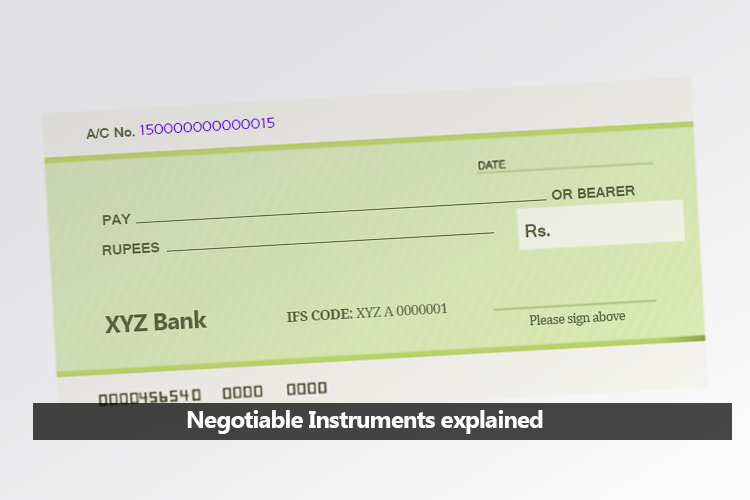
All 1800 odd branches will come under CTS by September
RBI on Friday announced that all the 18,000-odd branches which are outside the centralised clearing system called cheque truncation system will come under it by September. This is decision is taken by Central Bank as part of further improving, speeding up, and fool-proofing the payments and settlement systems, it said. The Cheque Truncation System (CTS)…
Read article
Cheque Bounce: New provisions Sec 143 A & 148 inserted under NI Acts
The Negotiable Instruments (Amendment) Act, 2018 (Amendment) received the assent of the President on 2nd August 2018. Sec 143 A & 148 which have been now inserted in the NI acts is in addition to Section 138 of the NI acts which deals in cheque bounce cases. Equipped with the newly inserted sections to NI…
Read article What is the difference between holder and holder in due course?
Section 8 of NI act provides that holder is any person who is entitled in his own name to the possession of negotiable instrument and has right to receive or recover the amount from the parties thereto.The word ‘entitled’ means that the person who claims to be holder should acquire the instrument in a lawful…
All you need to know about a cheque
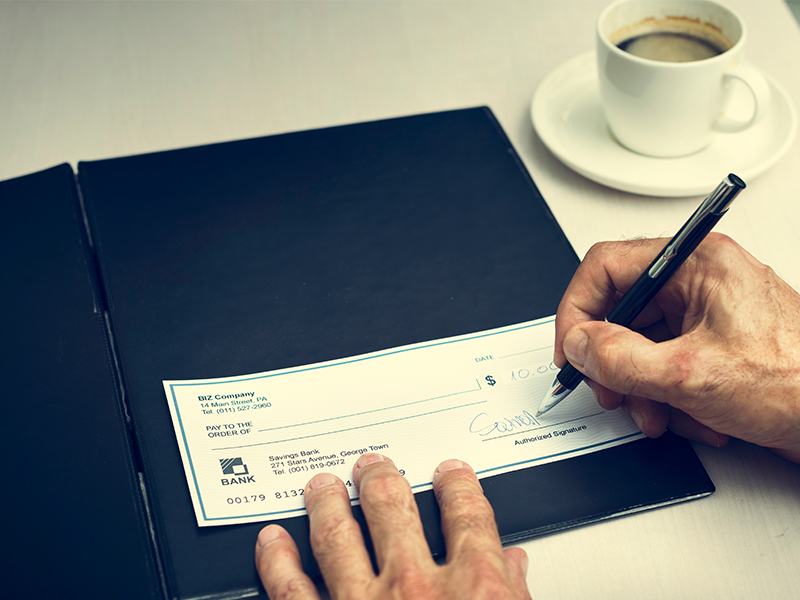
(This post explains Legal amount and courtesy amount,Effect of date written in Saka samvat,Cheques written in Regional Language, meaning of e-cheque.) A cheque has three principal parties viz. Drawer; Drawee and Payee. The drawer is the person who issues (draws) the cheque. The drawee is the paying bank whose name and address is printed on…
Read article