
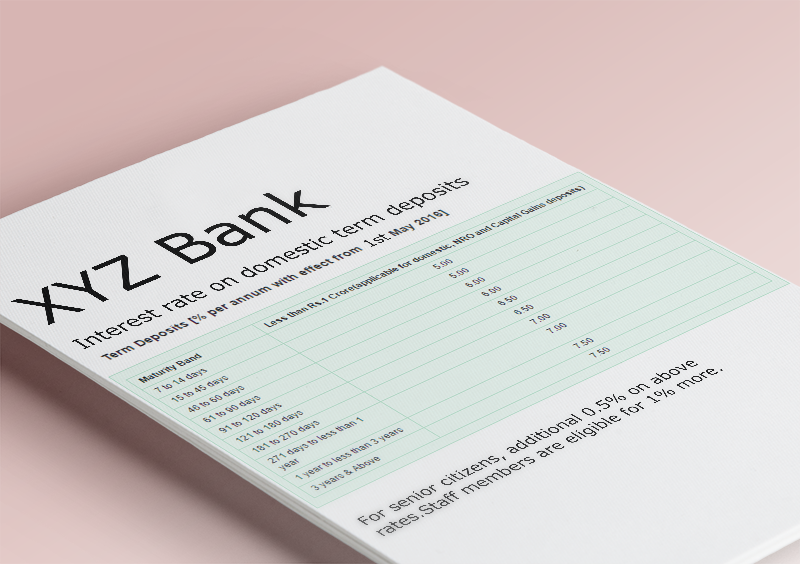
Understanding Time Deposits, Operational Instructions, and Interest Payments
A time deposit is a type of bank account that earns interest on the condition that the funds remain deposited for a predetermined period. The term “periodicity” in the context of time deposits refers to the specific duration for which the funds are committed. This term can range from as short as 7 days to…
Read article3 categories of Stamp duties in India
[This article elucidates details of three categories of stamp duties in relation to transaction type, on adjudication, impounding of documents and also refund of unused stamp papers. The idea of Government raising revenue by way of stamp duty from the transactions of its citizen said to be originated in Holland in the early sixteenth century.…
Read article RBI Regulations: Interest paid on various types of deposit accounts
This post elucidates how interest rates offered by banks may vary based on the tenor of deposits, the Periodicity of interest payable on SB accounts, accounts frozen by enforcement authorities, and floating deposits. Additional rate of interest paid by banks in certain cases, interest payable on NRE and FCNR (B) deposits, rules regarding interest payable…
Read article Loan and advances against fixed deposit/term deposit
A loan against a term deposit, also known as a loan against a fixed deposit (FD), is a secured loan that allows bank depositors to borrow against the security of the deposits. Loans or cash credit limits can be availed against Fixed Deposits, or Cash Certificate and Recurring deposits. Loans can be availed against domestic…
Read article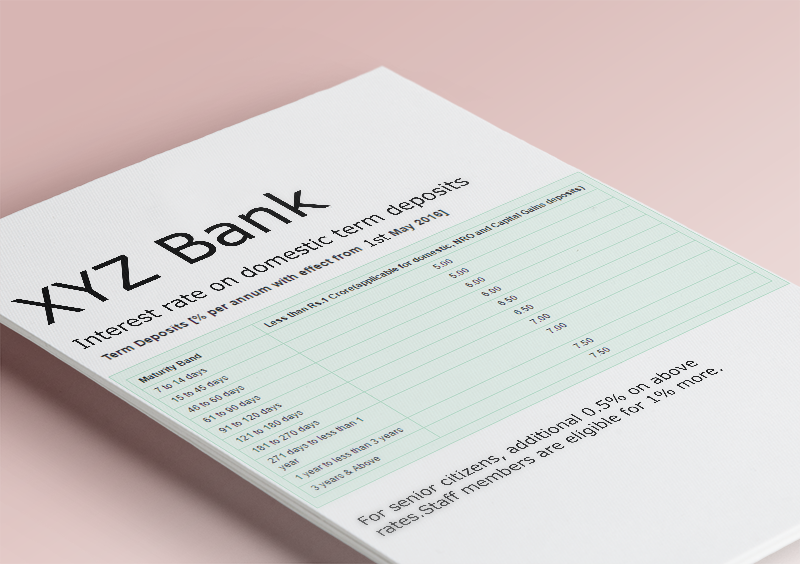
Tax saving fixed deposits: Dual benefit of tax saving with assured interest
An individual or HUF who has opted for the old income tax rule can invest in Tax saver fixed deposits of banks, not exceeding the aggregate limit of Rs.150000.00 u/s 80 (C) of IT in a financial year is eligible for tax relief. The ‘deposit’ can be opened in a single name or joint names…
Recent Rule of RBI on renewal and closure of overdue FD
A deposit is considered overdue when the maturity date has passed, and the deposit holder has not withdrawn or renewed it. This means the deposit has reached the end of its term, but no action has been taken to either take the principal amount back or extend the deposit period. Each bank has its own…
Read article