
Role of Financial Sector Regulators in an Economy
Financial regulators are government agencies responsible for overseeing and regulating financial institutions and markets. The role of regulators of financial sectors encompasses a comprehensive framework of laws, rules, and procedures established by governments and financial authorities. Its essential objectives are to maintain stability and integrity in the financial system, protect consumer interests, and foster fairness…
Read article
Effect of an Increase in the Money Supply
The money supply is the entire stock of currency and other liquid instruments circulating in a country’s economy at a specific time. The circulating money involves the currency, printed notes, money in the deposit accounts, and the form of other liquid assets. In India, the Reserve Bank of India follows M0, M1, M2, M3, and…
Read article
Effects of Repo Rate, SDF rate changes
Repo suggests the rate at which liquidity is injected into the banking system whereas Reverse Repo is the rate at which RBI absorbs liquidity from the banks. RBI controls the money supply in the country by effecting the changes in repo rate & reverse repo rate. Therefore repo and SDF (reverse repo rate) are known…
Read article
Explained: Equilibrium in the Money Market
A money market is said to be in equilibrium if the quantity of money demanded is equal to the quantity of money supplied at a particular rate of interest. A shift in money demand or supply in an economy will lead to a change in the equilibrium interest rate. The money market involves of money…
Read article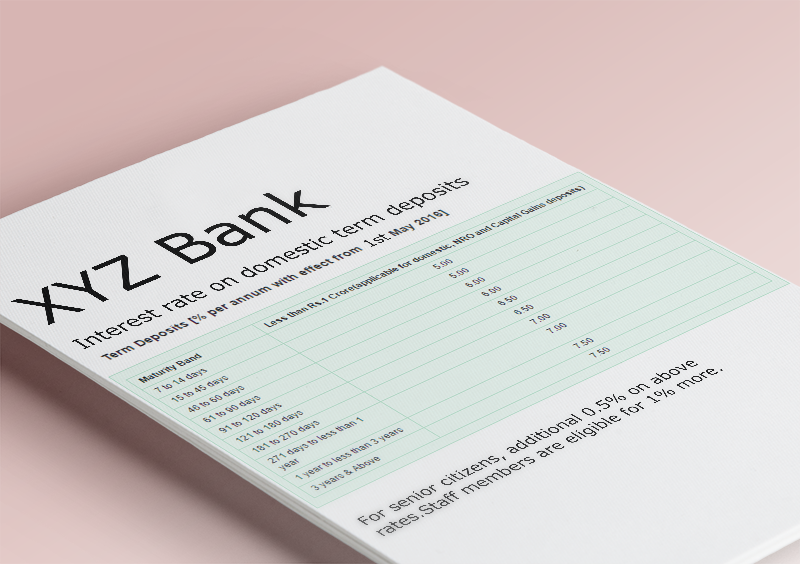
Determination of Rate of Interest
Interest rate in an economy is determined by the forces of demand and supply of money in a free market. The supply of funds is influenced by the willingness of consumers, businesses, and governments to save. The demand for funds reflects the desires of businesses, households, and governments to spend more than they take in…
What is a money demand curve?
The demand curve for money shows the quantity of money demanded at each interest rate. Its downward slope expresses the negative relationship between the amount of money demanded and the interest rate. Its downward slope expresses the negative relationship between the quantity of money demanded and the interest rate. The relationship between interest rates and…
Read article