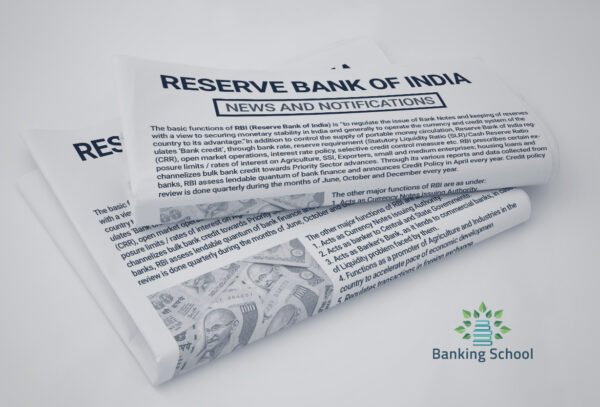
Penalties for Banking Offences in India

Banking is a trust-driven business, and strict laws ensure this trust is never compromised. In India, penalties for banking offences are laid down in two cornerstone legislations—the Banking Regulation Act, 1949 and the Reserve Bank of India Act, 1934. These laws prescribe punishments ranging from imprisonment to hefty monetary fines, depending on the nature of…

 Inspection vs. Scrutiny in Banking and Compliance

In the world of banking, auditing, and regulatory compliance, the terms inspection and scrutiny are often used interchangeably. However, while both involve detailed examination, they differ in  purpose, process, and depth of analysis. Inspection * Purpose: To verify that activities, processes, or documents meet prescribed criteria or standards. * Process: A systematic, formal review*of records,…

Preservation of Records and Return of Paid Instruments in Banking

Efficient record management is one of the cornerstones of banking. Banks are legally required to preserve financial and customer records for specific periods, ensuring compliance, operational continuity, and customer trust. In India, the Reserve Bank of India (RBI) and other regulators mandate clear timelines for record retention, alongside procedures for secure destruction after expiry. This…

Winding Up, Mergers, and Acquisitions in Banking: Why They Matter

The banking industry is constantly evolving, and behind its stability and growth lie key processes such as winding up, mergers, and acquisitions (M\&A). These mechanisms don’t just affect banks—they influence financial stability, market competitiveness, and customer trust. To ensure fairness and resilience, they are governed by strict regulatory frameworks, primarily the Banking Regulation Act, 1949,…

Understanding Annual Accounts and Balance-sheets

A company’s balance sheet, also known as a “statement of financial position,” reveals the firm’s assets, liabilities, and owners’ equity (net worth) at a specific point in time. It’s used by investors, creditors, and analysts to assess a company’s financial strength, ability to pay debts, and growth potential liabilities, current liabilities, contingent liabilities & assets.)…

Regulation to Strengthen Financial Stability in India: RBI, SEBI, and Policy Reforms

India’s financial system stands on the foundation of robust regulation and forward-looking reforms. With the Reserve Bank of India (RBI), the Securities and Exchange Board of India (SEBI), and the government working in tandem, the country continues to reinforce stability, transparency, and resilience in the face of global and domestic challenges. RBI’s Role in Safeguarding…