

Service Costing: Features and Applications
Service costing, also referred to as operating costing, applies to services that lack a tangible form but fulfill consumer needs and preferences. It is a method used to ascertain the expenses incurred in the provision of services. The primary objective of service costing is to determine the cost per unit of service, enabling businesses to…
Read article
Joint Products, By-Products, and Accounting
Joint Products Joint products refer to two or more products that are simultaneously produced through the same process and separated during processing, each possessing a sufficiently high saleable value to be recognized as a main product. By-Products A by-product is a secondary product or substance generated during the manufacturing or processing of another product. By-products…
Read article
What is Inter-Process Profit?
In manufacturing, a finished product is created through a series of processes that transform raw materials into semi-finished goods before reaching the final, market-ready stage. This production cycle typically involves multiple stages, including processing, assembly, and quality control. A semi-finished product refers to raw materials that have undergone partial processing and are in a work-in-progress…
Read article
Equivalent Units in Accounting
Equivalent units in accounting refer to the process of expressing partially completed units as a proportion of fully completed units. This is determined using the following formula: Equivalent Units of Production=Actual Number of Units in Process× Percentage of Work Completed Illustration: Consider a chocolate factory that is producing chocolate bars. At the end of the month, the factory has 1,000 bars that are only 50% complete.…
Read article
Overview: Collecting Direct Costs
Direct costs are expenses that can be specifically attributed to a particular cost object, such as a product, service, or project. These costs are easily traceable to a specific activity or output. Examples of direct costs include raw materials used in manufacturing, wages of employees directly involved in production or service delivery, fuel and utilities…
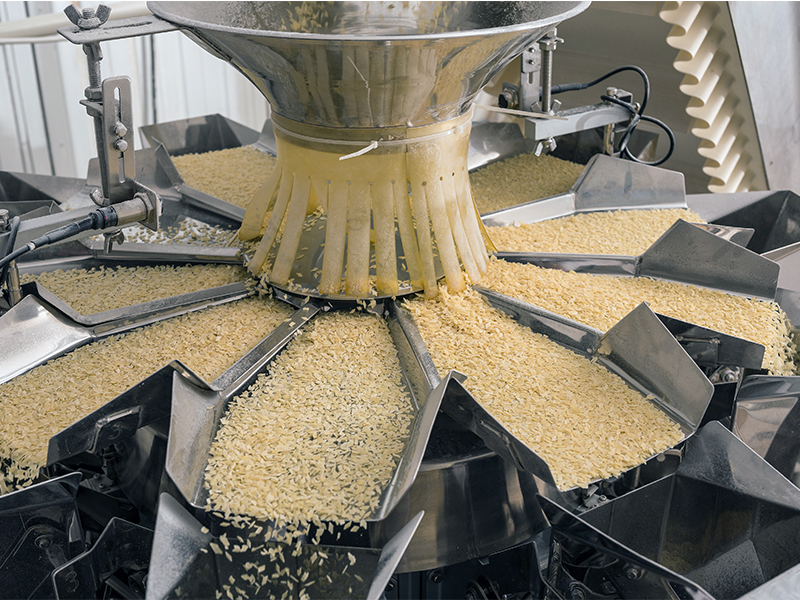
Understanding Process Loss, Abnormal Loss, and Abnormal Gains
In process costing, process loss refers to the expected wastage during production, whereas abnormal losses are unexpected and avoidable losses. Conversely, abnormal gains occur when actual output exceeds the expected output. Process Loss: Process loss arises due to the inherent wastage, scrap, or spoilage that occurs at various stages of the manufacturing cycle. Such losses…
Read article