

Statement of RBI MPC Meeting held today: Repo rate remains unchanged
“The Monetary Policy Committee held on Thursday (August 8) decided by a 4:2 majority to keep the policy repo rate unchanged at 6.5%. The MPC also decided to remain focused on withdrawal of accommodation to ensure that inflation progressively aligns with the target, while supporting growth. “These decisions are in consonance to achieve the medium-term…
Read article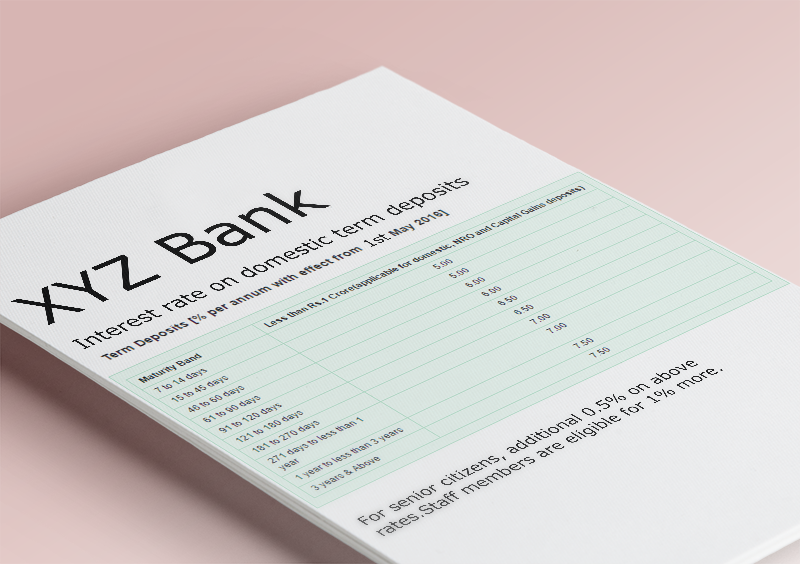
Overview: Know Your Customers (KYC) norms
This post explains Operational Aspects of KYC including Monitoring of Transactions. The KYC norms in banking and other financial institutions are a set of procedures and rules as outlined by the regulator RBI. The regulated institutions must follow to verify the identity and address of their customers. This process involves collecting and verifying documents that…
Read article
Interest Subvention Scheme for Agri and allied activities through KCC during 2024-25
Modified Interest Subvention Scheme for Short Term Loans for Agriculture and Allied Activities availed through Kisan Credit Card (KCC) during the financial year 2024-25 To provide short-term crop loans and short-term loans for allied activities including animal husbandry, dairy, fisheries, beekeeping, etc. up to an overall limit of ₹3 lakh to farmers through KCC at…
Read article
Bank pensioners’ dearness from August’24 to January ’25
Consumer Price Index for April, May, and June 2024 are 139.40, 139.90, and 141.40 respectively. Average converted to 1960 base) becomes 9218.74. The increase in slabs 9218.74/4 is 716.85 rounded off to 717 slabs. Hence The increase in DA slabs for the pensioners is 24 from AUG 2024 to January 2025. The details of dearness…
Read article
Dearness Allowance for Bank Staff for the Quarter August-October 2024: Confirmed
Labour Bureau announced the Index number for June 2024CPI(IW) for April’24=139.40 May’24=139.90 June’24 141.4 Average 140.23.140.23-123.03= DA for Aug-October ’24 is17.20%Last quarter 15.97 % increase in DA is 1.23% The DA chart for Officers, Clerical Staff, and Sub-Staff are as under Officers DA for the Quarter of August 2024 to October 2024 Clerical Staff DA…
Bank Sub-Staff DA for August- October 2024
CPI(IW) for April’24=139.40 May’24=139.90 June’24 141.4 Average 140.23.140.23-123.03= DA for Aug-October ’24 is17.20%Last quarter 15.97 % increase in DA is 1.23% SUB STAFF BASIC New DA Previous DA Difference 19500 4389 4075 314 20165 4534 4209 324 20830 4678 4344 335 21495 4823 4478 345 22160 4968 4613 355 22990 5148 4780 368 23820 5329…
Read article