
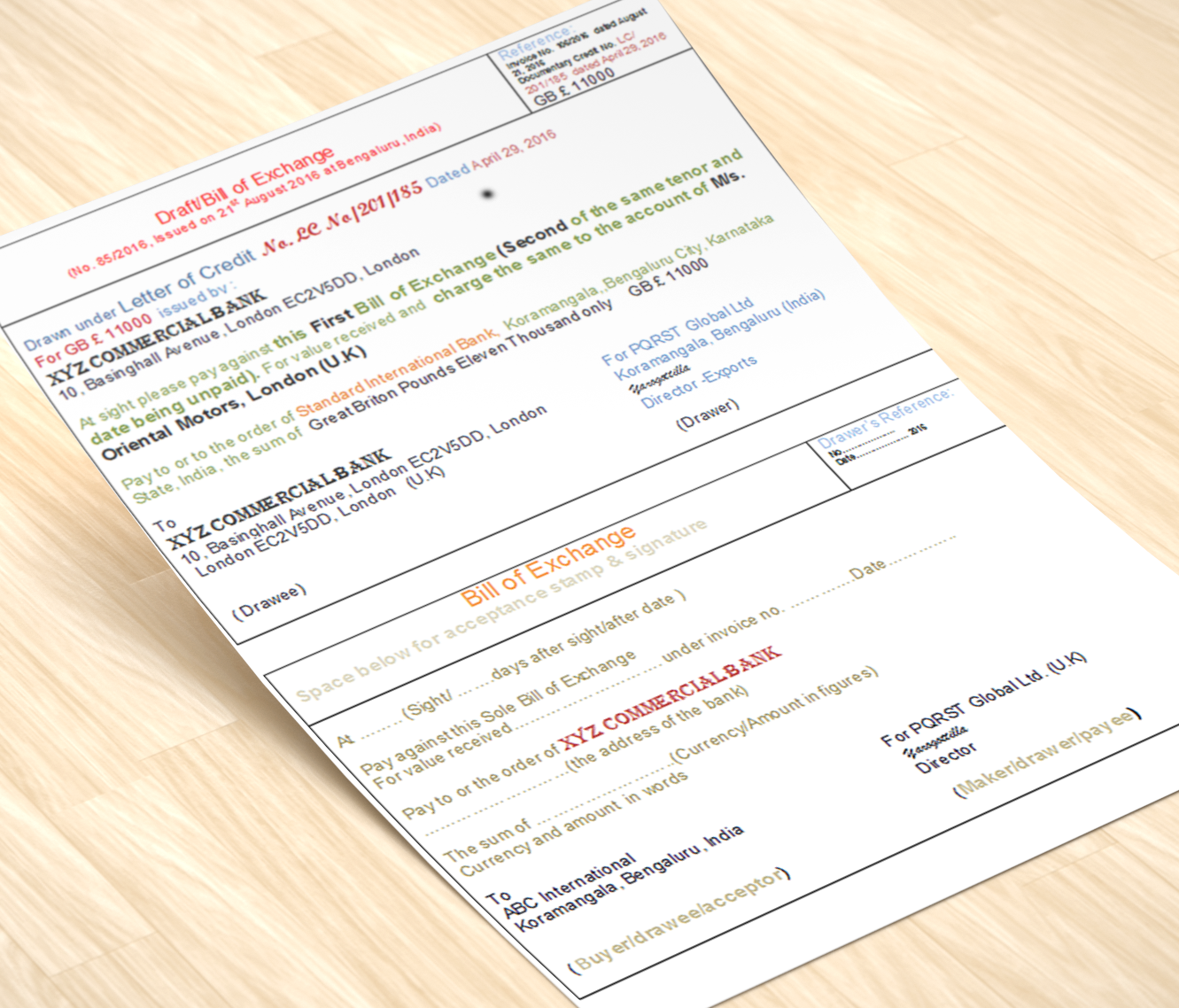
Understanding the different types of letters of credits (LC)
(This post explains the meaning of Standby LC, Green Clause LC, Red clause LC, Without Recourse LC, back to back LC, Revolving credit LC, Irrevocable Letter of Credit confirmed by advising bank, Irrevocable Credit not confirmed by advising bank, Irrevocable Credit, Revocable Credit etc.) Revocable credit: Credit may be either revocable or irrevocable. Revocable credits may…
Read article
Understanding different types of Standby Letter of Credits
A Standby LC is a form of irrevocable guarantee for a payment. Since American Banks are prevented from giving the guarantee in that country, the concept of ‘Standby LC’ came into existence. Standby Letter of Credit is an agreement wherein the buyer’s bank promises full payment of goods/services sold by him if the buyer fails to…
Read article
Do you know how ISO 20022 gained supremacy over SWIFT messages?
ISO 20022 (pronounced ‘ISO twenty-oh-twenty-two’) or Universal financial industry message scheme (also called” UNIFI”) is a global standard for exchanging electronic messages between financial institutions. The ISO 20022 standard covers financial information transferred between financial institutions that include payment transactions, securities trading, and settlement information, credit as well as debit card transactions, Foreign Exchange transactions,…
Read article
Activities of Payment gateways and payment aggregators explained
Payments in the online space are facilitated by a number of intermediaries like the payment gateways and payment aggregators. These intermediaries act as the conduit between merchant & customer who is willing to pay for the services availed or the goods purchased. In online payments all the debit and credit transactions are routed through credit…
Read article
Housing Loans for Non-Resident Indians (NRIs)
Non-Resident Indians (NRIs) seeking housing finance in India have access to a variety of loan options offered by commercial banks. These home loans generally carry interest rates starting from approximately 7.35% per annum, which may vary depending on the lending institution, loan type, and individual borrower profile. Interest rates may be either fixed or floating,…

NACH: Meaning, types and benefits of National Automated Clearing House
Edited and reposted on 11.05.2025 National Automated Clearing House (NACH) is a form of Electronic Clearing Service (ECS) that is available with core-banking-enabled bank branches in India. NACH has primarily two variants viz. ECS Credit and ECS Debit. The facility is used by the bank customers for automatic debit to their account every month to…
Read article